

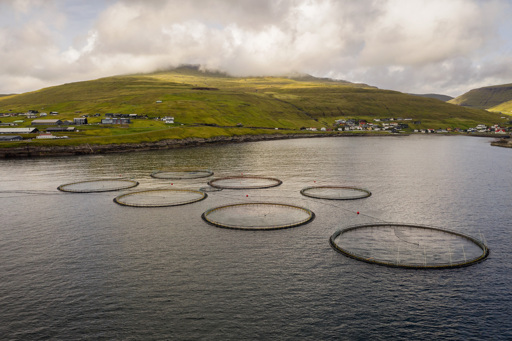
Why don’t we just stop eating fish though?
No, you don’t understand, these fish have less desease. So they’re good for eating.
I’m of the impression that fish farms are terrible for the environment, just like every mono culture (and all industrial animal farming):
MIT engineers design a way to increase yield in factory farming is not uplifting news…
It’s not about increasing yield, it’s about not spreading disease. Fish farms are terrible because unlike land animal farms, the disease can spread through the water to the rest of the environment.
I’m working on ways to reuse organic matter from the trash to feed fish or for direct food people pallets. Don’t you like PPs? Its like kornflakes but for lunch!
Care to elaborate???
While the process is incredibly interesting from a science standpoint it essentially serves to increase the efficency of factory farming. Factory farming is not a sustainable model to feed people and thus making efficency gains only helps to prolong the life of an industrie that destroys our habitats. Fish are suffering inside these farm, they are purposefully starved before they are slaughtered and many die before they are ready for slaughtering additonally many farms require external fish supplies to feed their own fish so the still contribute to the world wide overfishing.
Ok, so what is a sustainable way of feeding everybody?
A plant based diet would reduce our land use by 75% so that seems like a good place to start
Lab grown meat and salmon seems to be on a good track right now, but still a bit far off for widespread adaption and low cost, until then i guess either a slow controled population decrease (this sounds like killing, this is not what i mean), controlling the obesity crisis by regulating junk food producers which purposefully produce addictive food, focus on a plant based diet, less overconsumption, reducing food waste by throwing less stuff away, abolishing a best before date. Just some (not perfect) examples from the top of my head.
The thing is: A lot of that stuff isn’t going to happen any time soon and factory fishing is happening - it is a reality. Reducing the harm it causes still seems like a net good to me.
I understand where you are coming from, I just think that harm reduction in a system that will still cause harm is the wrong way to achieve change. I guess it is just two different ways to tackle a problem.
If you can figure out a way to get things to actually change, great, but the problem is that doesn’t seem to be happening. Ultimately: Mitigating is better than not mitigating, at least until people find a way to truly shift to a more sustainable means.
There are a number of extremely vocal vegans around here, and a few of them are the type that lead people to hate on all vegans by being super obnoxious about it. This type will comment about it even on news that is a net positive (less disease spreading, less suffering and death among the fish) if there is any consumption of animals involved. Guessing this person one of them.
You can check my post history for these type of comments and will notice that it is rare for me to comment on this. It’s not even about being vegan, i just do not see how this is uplifting news. The science portion of this article is quite insightful and i think it’s placed quite well in a science community, but increasing the yield of factory farms is nothing uplifting in my opinion. If there was an article “new food allows chicken to grow twice as fast and twice as fat before slaughtering” i would react the same way, because it would realistically not result in less animals being slaughtered but would only result in more cheap meat consumption. And this is nothing uplifting in my opinion.
It’s not even just about increasing yield. It’s about less disease, which means less spreading it to local, wild populations. This is a good thing.
That’s pretty clever, but i suspect it could be many, many years before it’s approved for use around the world